


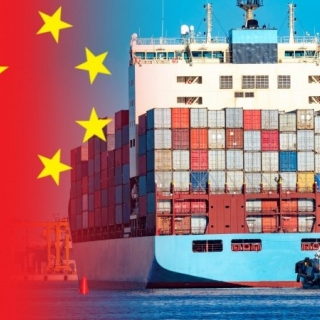
President Donald Trump's plan to revive U.S. shipbuilding using massive fees on China-linked ship visits to American ports is causing U.S. coal inventories to swell and stoking uncertainty in the embattled agriculture market, as exporters struggle to find ships to send goods abroad.
Trump is drafting an executive order that would rely on funding from a U.S. Trade Representative proposal to levy fines of up to $1.5 million on China-made ships or vessels from fleets that include ships made in China.
Those potential port fees have limited the availability of ships needed to move agriculture, energy, mining, construction and manufactured goods to international buyers, according to major U.S. exporters and transportation providers in interviews with Reuters, letters to U.S. officials, and comments ahead of USTR hearings next week.
Vessel owners have already refused to provide offers for future U.S. coal shipments due to the proposed USTR fees, Xcoal Energy & Resources CEO Ernie Thrasher said in a letter to U.S. Department of Commerce Secretary Howard Lutnick dated March 12 and seen by Reuters.
Enacting and implementing those fees could cease exports of U.S. coal within 60 days, putting $130 billion worth of shipments at risk, Thrasher said. He said the fee structure could add up to 35% to the delivered cost of U.S. coal, making it uncompetitive on the global market.
"The loss of direct and indirect jobs would be catastrophic," said Thrasher, who confirmed sending the letter and said he has not received a response.
The letter from Pennsylvania-based coal marketer Xcoal and comments from agriculture representatives showing tangible impacts from the proposed fees have not previously been reported.
Coal mines in West Virginia are also preparing to lay off miners as unsold coal inventories pile up, Chris Hamilton, CEO of the West Virginia Coal Association, told Reuters. He did not provide specifics.
The proposed fees could also make it harder for the U.S. to export other energy products like oil, liquefied natural gas, and refined fuels, the American Petroleum Institute, the powerful oil industry lobbying group, said in comments submitted to the USTR dated Mar. 10.
High-profile containership operators and their retail and manufacturing customers have been vocal about the potential harm from the fees. Experts warn that the bulk and tanker ships that move basic goods like food and fuel could be more exposed because they cannot spread the cost among dozens of customers like container carriers can.
U.S. farmers, who are already getting pummeled by retaliatory tariffs from China, Mexico and Canada, also are caught in the crossfire of the Chinese ship fee fight, the American Farm Bureau Federation said.
The inability to secure ocean freight transportation from May and beyond has restricted their ability to sell bulk U.S. agricultural products like corn, soybeans and wheat because exporters are unsure what the final cost would be, three U.S. grain export traders told Reuters.
The United States exported more than $64 billion in bulk crops, bulk animal feed and vegetable oils in 2024, according to U.S. Census Bureau Trade data. The North American Export Grain Association, which represents crop commodities exporters, will participate in next week's hearing.
Bulk agricultural exporters could face an additional $372 million to $930 million in annual transportation costs from the fees, the Farm Bureau said. That would represent substantial margin loss in global markets where competitiveness is often determined by mere pennies per bushel.
U.S. agricultural exporters get an edge over global rivals by leveraging a cost-effective and efficient domestic transportation system for moving products to market, said Alexa Combelic, the American Soybean Association's executive director of government affairs.
"When you add costs to that efficient system, it's no longer efficient. We no longer have the competitive edge," Combelic said.
Source: Fxstreet
Renewed tensions between the United States and Russia have resurfaced following an incident involving an oil tanker, sparking market concerns about potential disruptions to global energy supplies. Was...
According to a report from the US Department of Labor (DOL) released on Thursday, the number of Americans filing new applications for unemployment insurance rose to 208,000 for the week ending January...
Geopolitical issues have heated up again after statements and political signals from the United States sparked speculation about a possible US takeover of Greenland. Although no concrete action has be...
Private employment rose less than economists expected in December, according to the ADP report. Private employment rose 41,000 (Estimate +50,000) in December, compared with a revised -29,000 in Novem...
Greenland is not only a strategic location, but also a world-class mineral repository. The island holds vast reserves of rare earth elements (REEs), essential for modern technology. These minerals are...
Oil prices stabilized on Thursday (February 12th), as the market reassigned a risk premium to US-Iran tensions despite US inventory data showing swelling domestic supplies. This movement confirms one thing: geopolitical headlines are still more...
Gold prices weakened slightly on Thursday (February 12th), as more solid US employment data reduced market confidence in an imminent Federal Reserve interest rate cut. The strong employment data prompted market participants to shift expectations of...
The Hang Seng Index reversed its downward trend in Hong Kong on Thursday (February 12th), weakening by around 0.9% to around 27,000 after a strong session earlier. This decline halted the momentum of the short term rally, as investors began to...